
Penn Station Vision Studies
NY Penn Station — 2013
OVERVIEW
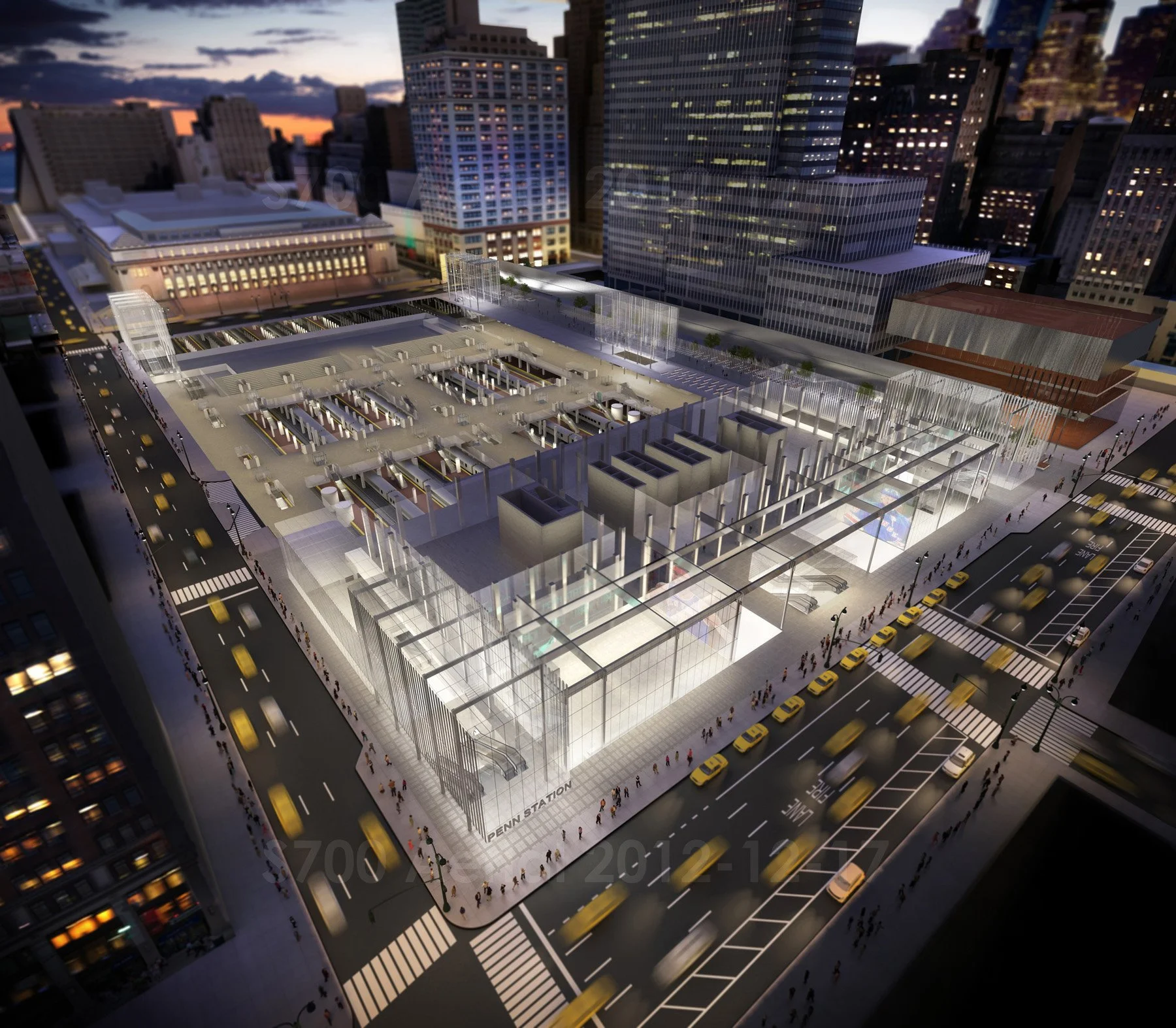
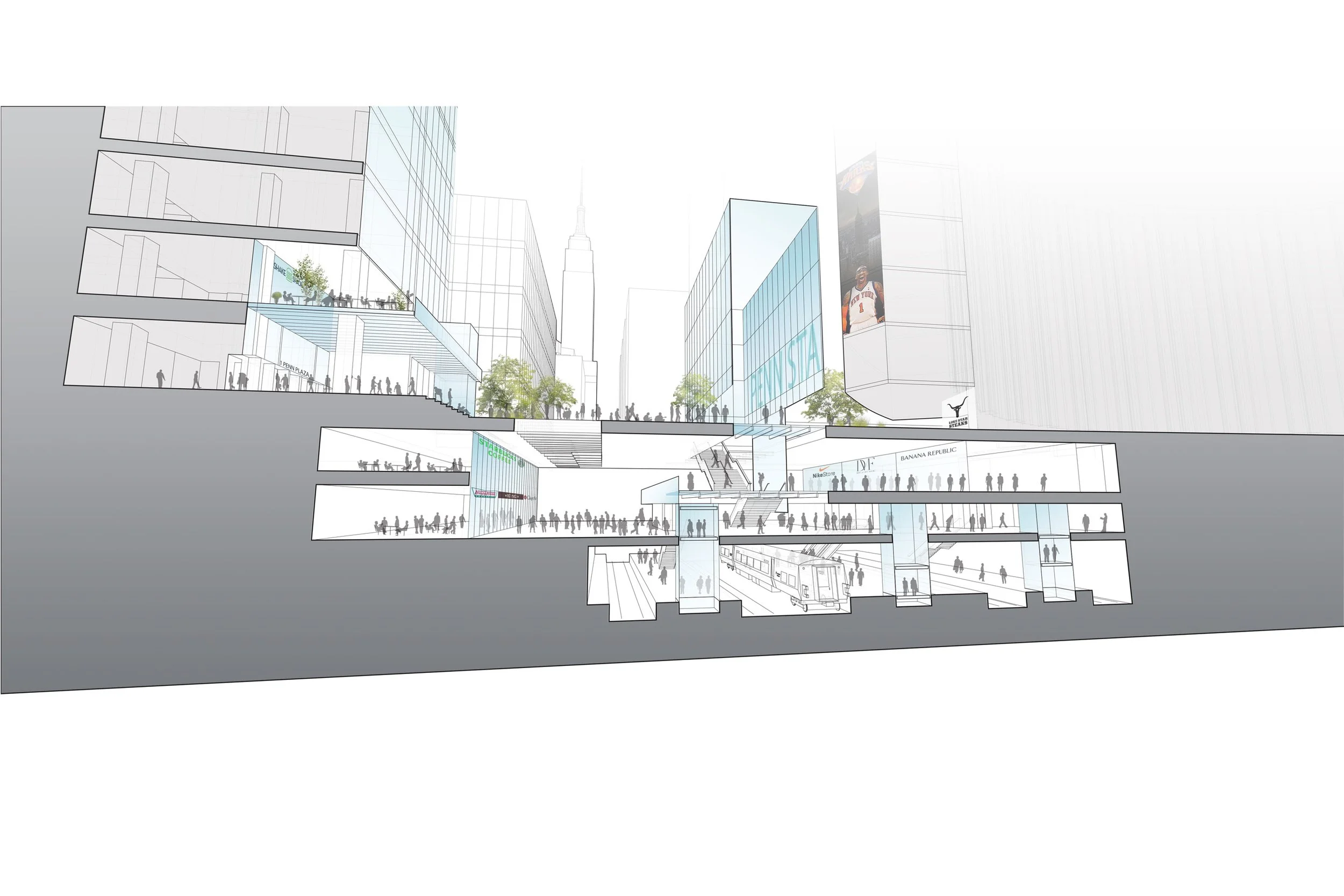
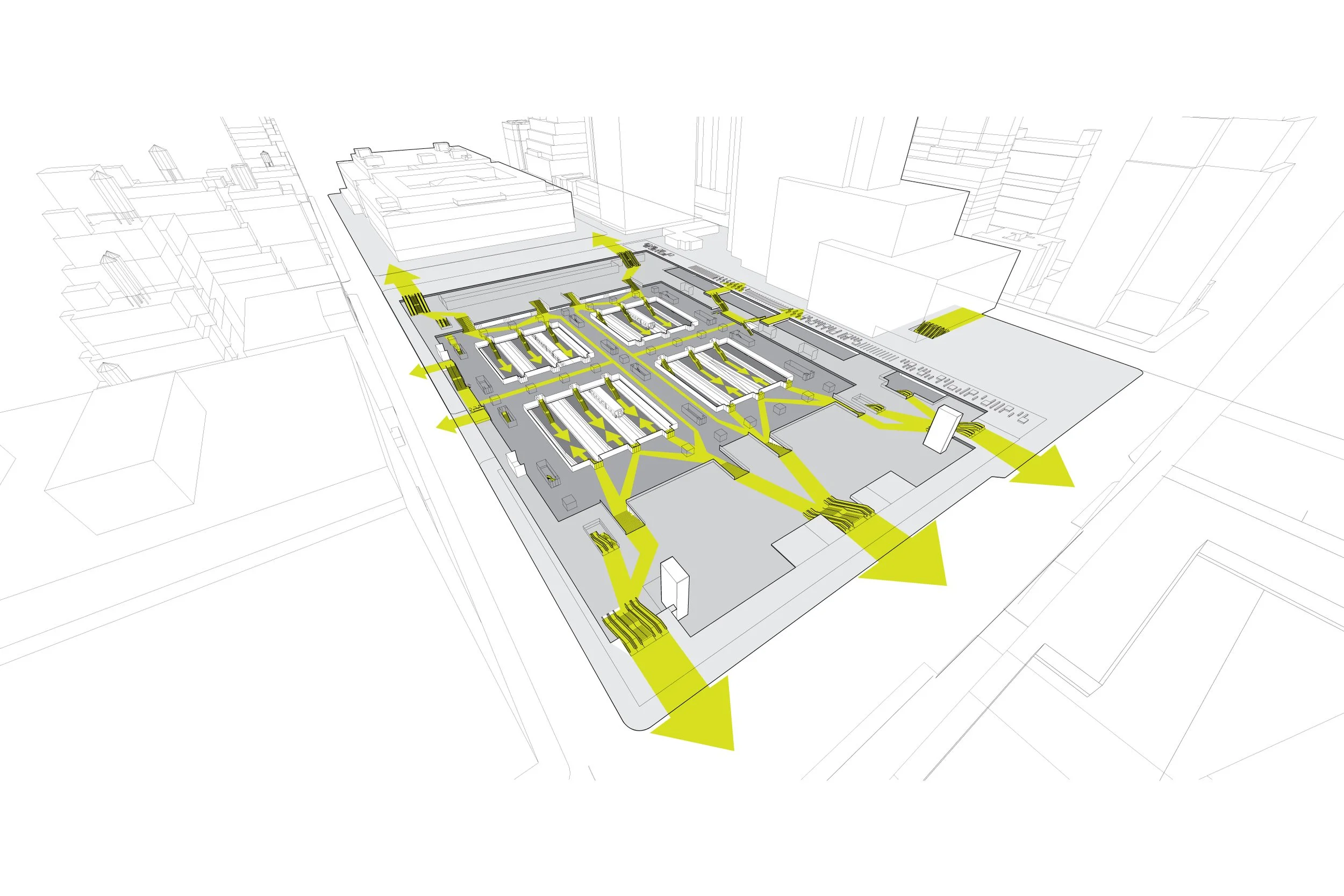
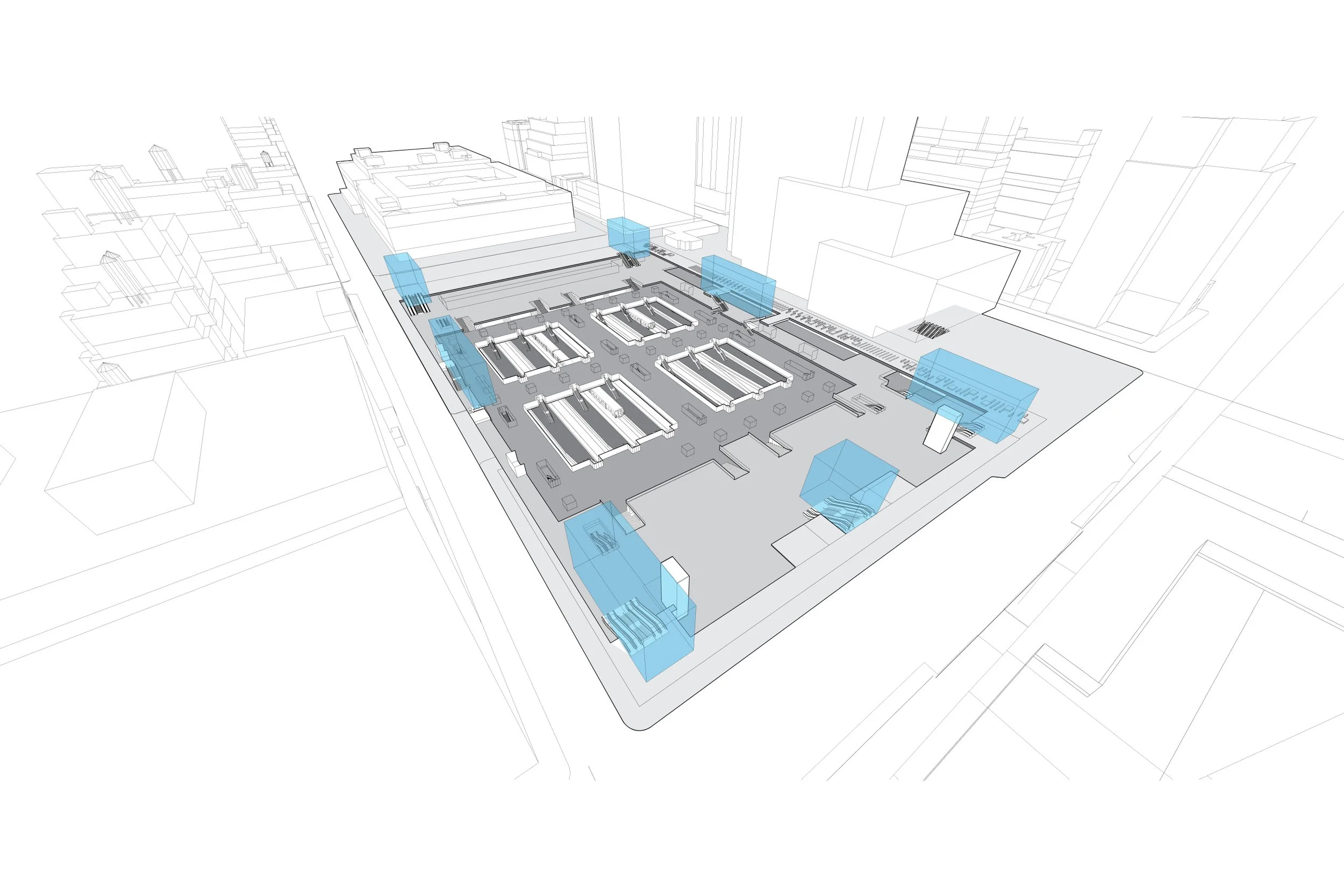
Long Island Railroad, Amtrak and New Jersey Transit shared a collective interest in providing improved passenger experiences within Penn Station and requested a vision with planning principles be established to inform and guide future station projects. Our team’s vision was to re-introduce the street grid throughout and most critically, introduce daylight at the perimeter of the original station footprint, including 6 new entries. Arriving and departing passengers would circulate to and from the train platforms guided by generous openings to the NYC sky, establishing direct visual connections and clear organization to the retail and support spaces. Street level circulation would be addressed through closure of 33rd Street.
The collective railroad team, Amtrak, Long Island Railroad and New Jersey Transit, needed a cohesive framework and vision that provided improved passenger experience for the busiest passenger rail station in the United States. Our organizing principal was re-introducing the structural clarity of the Manhattan grid into the main level of the station, with entry and exits located at the four corners of the double wide block (between 31st and 33rd streets). Both Madison Square Garden and 2 Penn Plaza hover above the station, but light and access could be introduced and maximized at the edges of this block, empowering arriving travellers to circulate towards light and providing clear wayfinding to the subways and streets above.
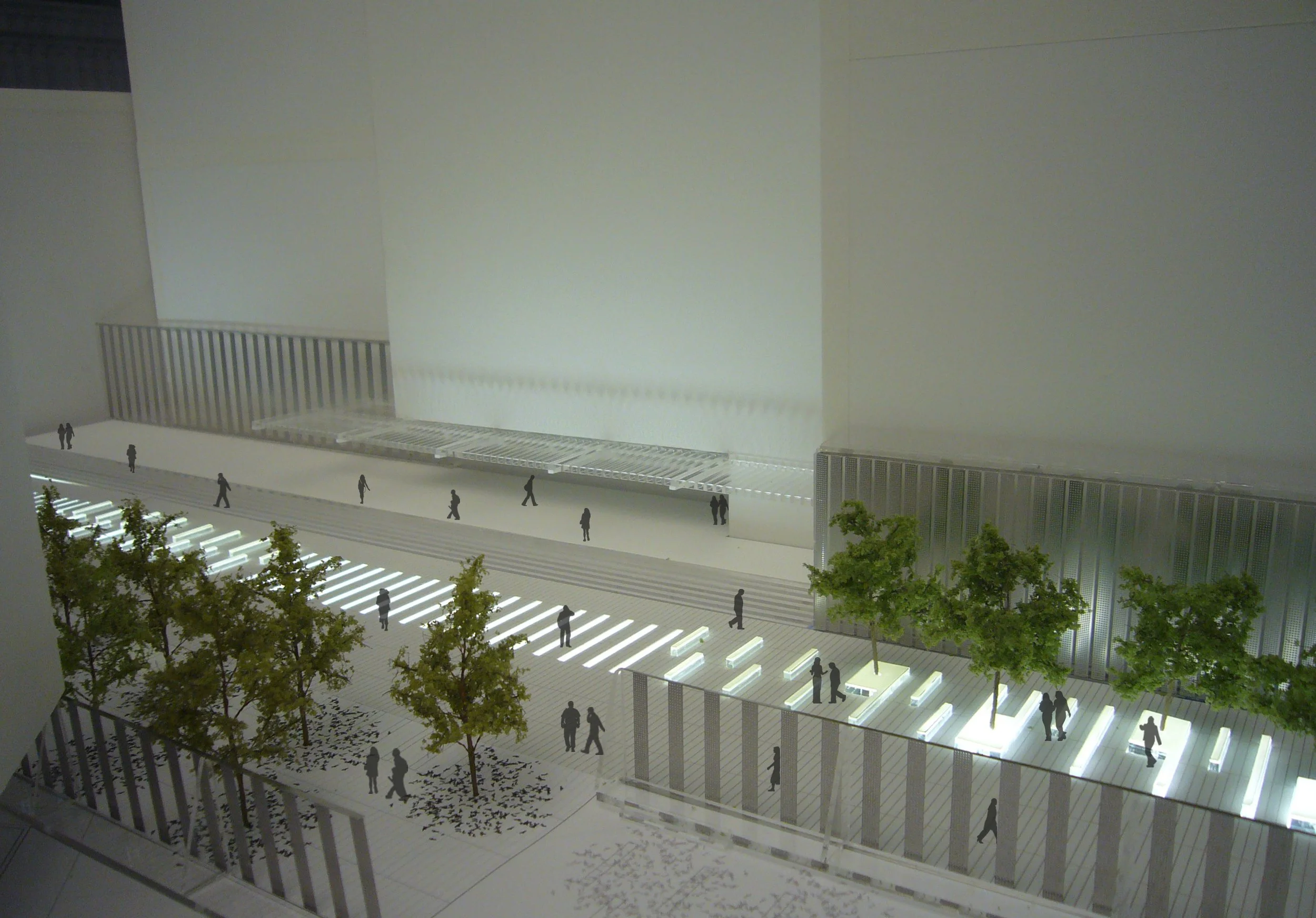
We worked closely with AECOM to develop designs and presentations to a number of private and public stakeholders, culminating in a final report that prioritized pedestrian circulation and strategic transformations to the station. Closing 33rd Street between 7th and 8th Avenues was one of the early initiatives of the project, and closely communicating with all interested stakeholders to understand and address vehicular access led to “Plaza 33”. This stretch of street was initially closed to vehicles in the summer of 2015 and then permanently closed thereafter, prioritizing pedestrian use and helping to alleviate station crowding.
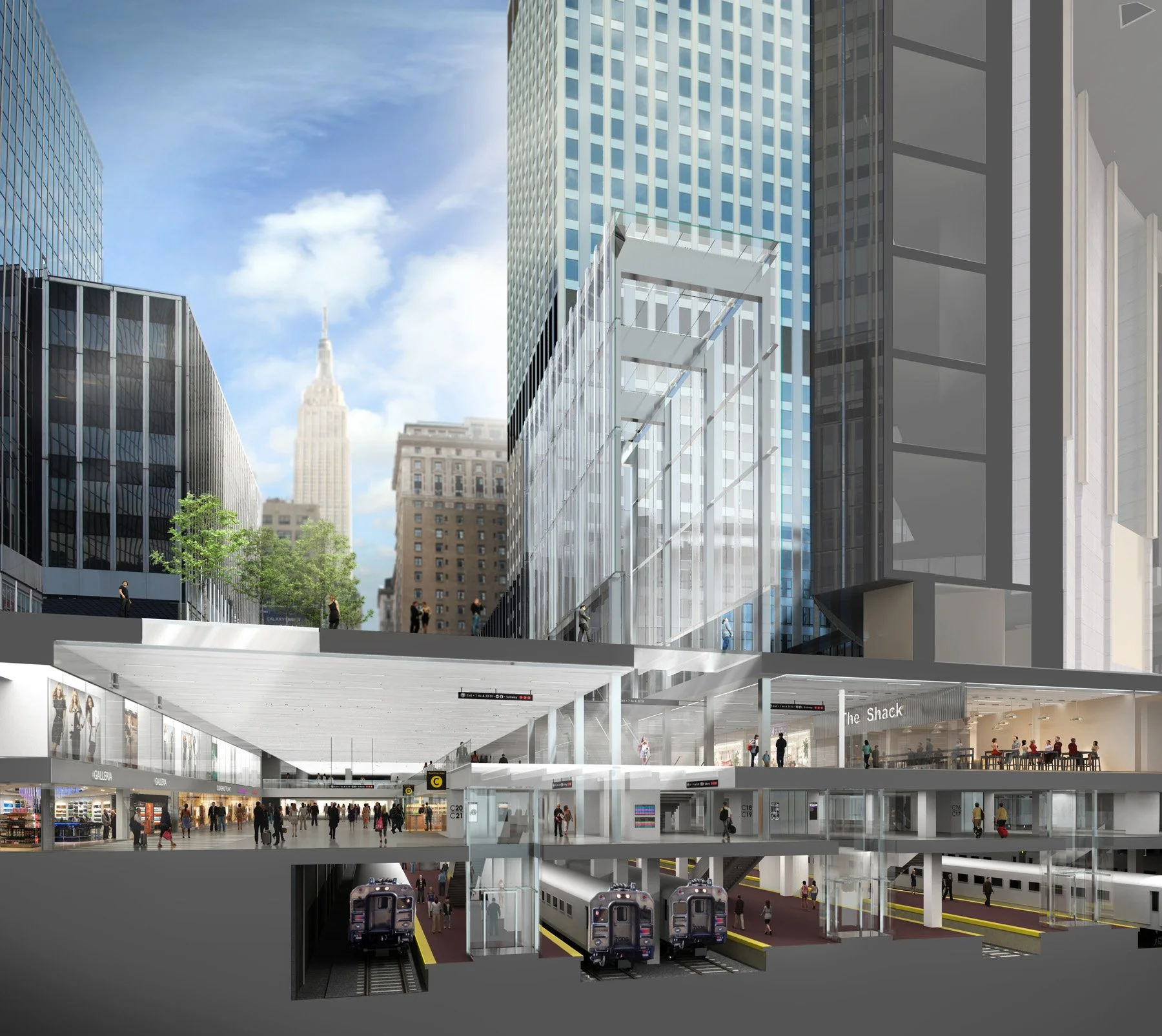
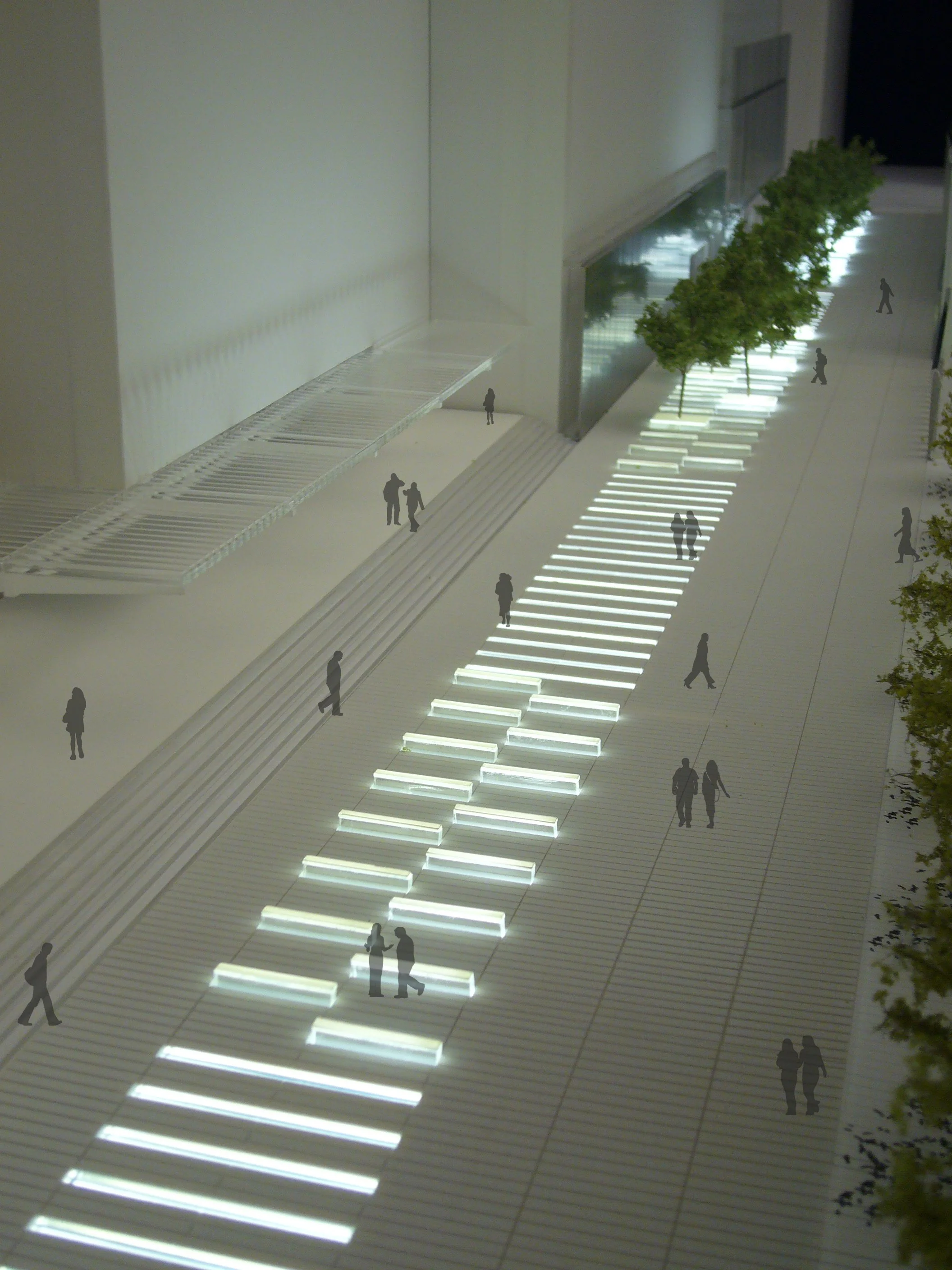
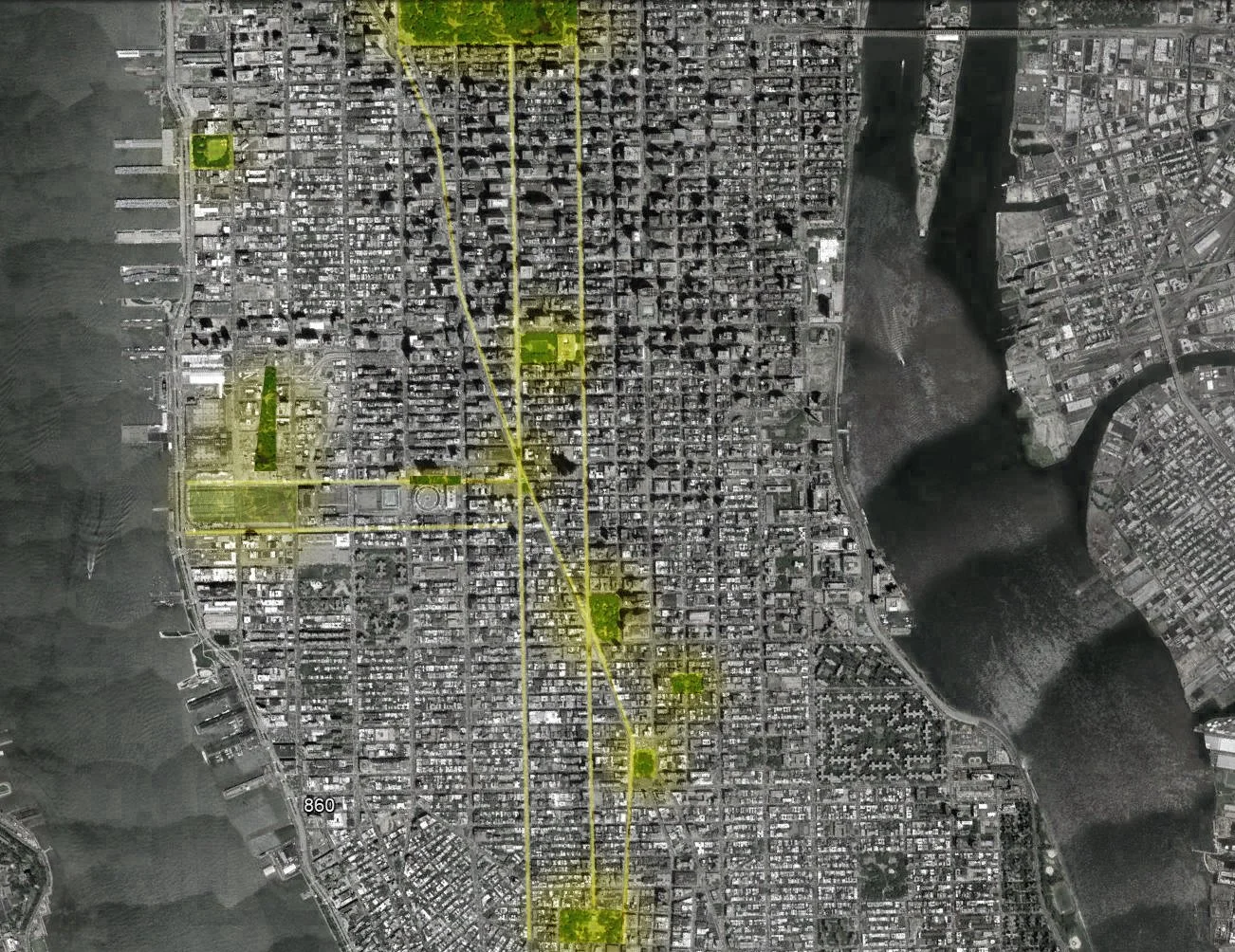
Diagrams provided by Studio James Carpenter, AECOM, and AJSNY
PROJECT TEAM
DESIGN
James Carpenter, Founder/President
Joseph Welker, Design Lead
Richard Kress
Garrett Riccardi
Razvan Ghilic-Micu